
Hog Breeding Program
Low input, hardy, high quality hogs...

Here at Four Oaks Farm, we're developing a silvopasture-based hog production system that integrates rotational grazing of pigs within a landscape of trees, grasses, and other forage crops. Silvopasture systems are designed to merge forestry and livestock grazing in a mutually beneficial way, enhancing biodiversity, soil health, and long-term productivity. In these systems, animals must be hardy, low-impact grazers that thrive on diverse forage while maintaining high productivity and docile behavior.
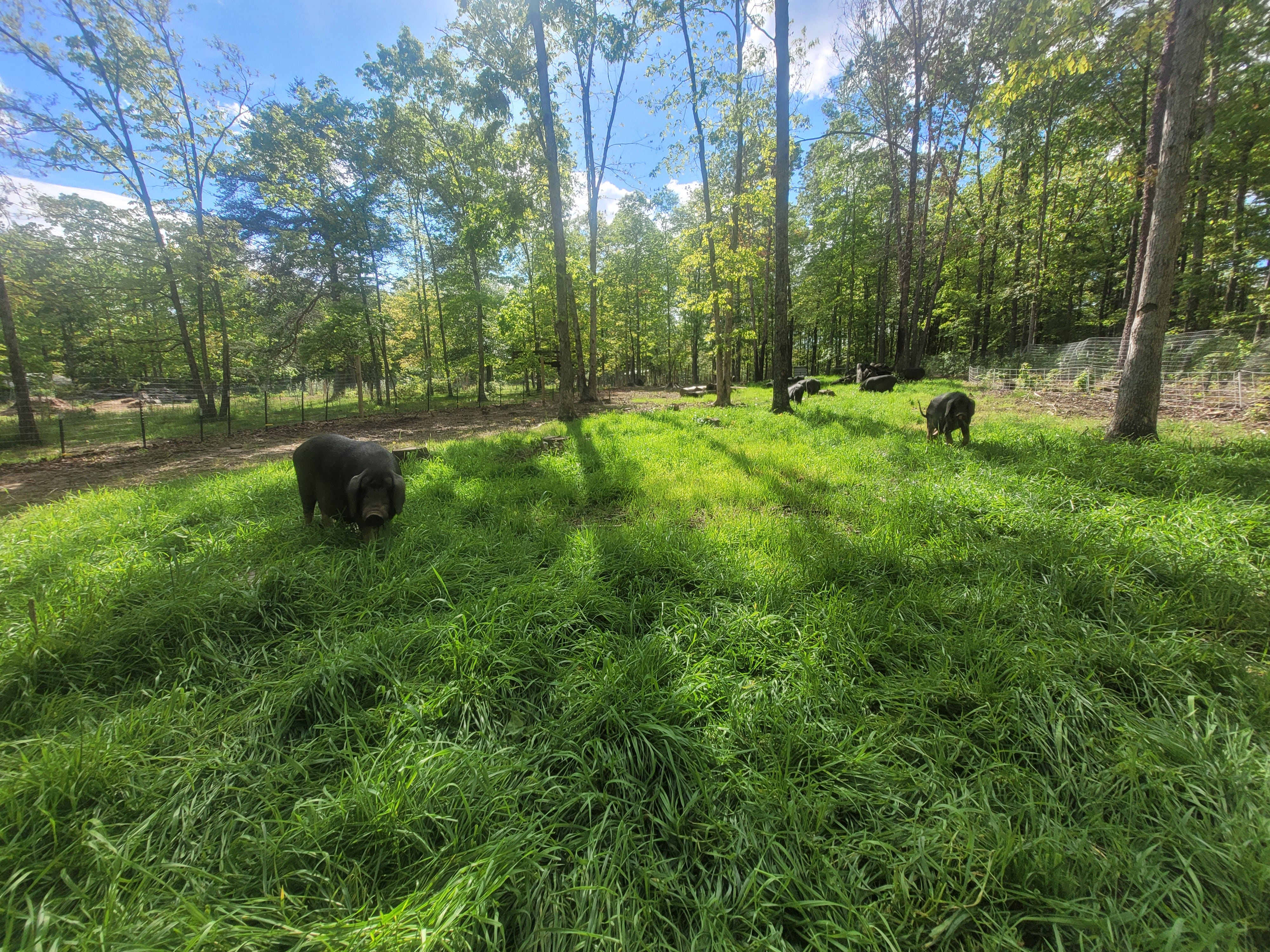
Our goal is to raise hogs that reach over 300 pounds within 8 to 10 months, relying primarily on a diverse, natural diet of grasses, tree leaves, fodder, fruits, and nuts, supplemented by no more than two pounds of corn/soy-free feed per day. To keep the system ecologically sustainable and economically viable, we emphasize pigs that have minimal rooting behavior, are gentle and easy to handle, require little intervention or medication, and leave a low environmental impact. We're also prioritizing very high meat quality with good marbling and tenderness, a medium lard profile, and strong feed efficiency under a forage-dominant diet.
The Meishan sow—an ancient Chinese breed developed over thousands of years for small-scale, forage-based pig farming—is uniquely suited as a maternal foundation for our goals. Meishans are among the most prolific pigs in the world, routinely producing 12–18 piglets per litter with exceptional mothering ability and low piglet mortality. Their temperament is notably calm and manageable, making them ideal for rotational management and low-stress handling in silvopasture settings where close human interaction and herd movement are required. One of their most remarkable features is their digestive efficiency on high-fiber diets. Unlike most modern Western pigs that require high-energy, grain-based feed to grow efficiently, Meishans are adapted to digest roots, tubers, legumes, leaves, and roughage—exactly the kind of varied forage offered in a silvopasture system. However, the pure Meishan’s small loin size, high fat content, and slow growth make it challenging to market both feeder pigs and finished pork at scale—particularly without premium pricing.
To solve this, we're introducing specific heritage and old line breeds that complement and balance the Meishan’s traits while maximizing hybrid vigor and improving their economically challenging traits. The breeds we've selected come from isolated, pre-commercialized lines—such as the Haraway Hampshire, Fudge Duroc, Old Line Berkshire, and traditional Gloucestershire Old Spots (GOS). These breeds bring a mix of leaner carcass traits, faster growth rates, larger loin sizes, and excellent meat quality. For instance, GOS contribute excellent forage ability, docility, and historical adaptation to orchard-based systems which is perfect for silvopasture. Haraway Hampshires add leanness and structural integrity and were once considered high quality “grass hogs”. Fudge Durocs have incredible marbling, leanness, structure, hardiness, and very high feed efficiency. Old Line Berkshires offer exceptional meat quality with a background of being very well suited to pasture based systems.
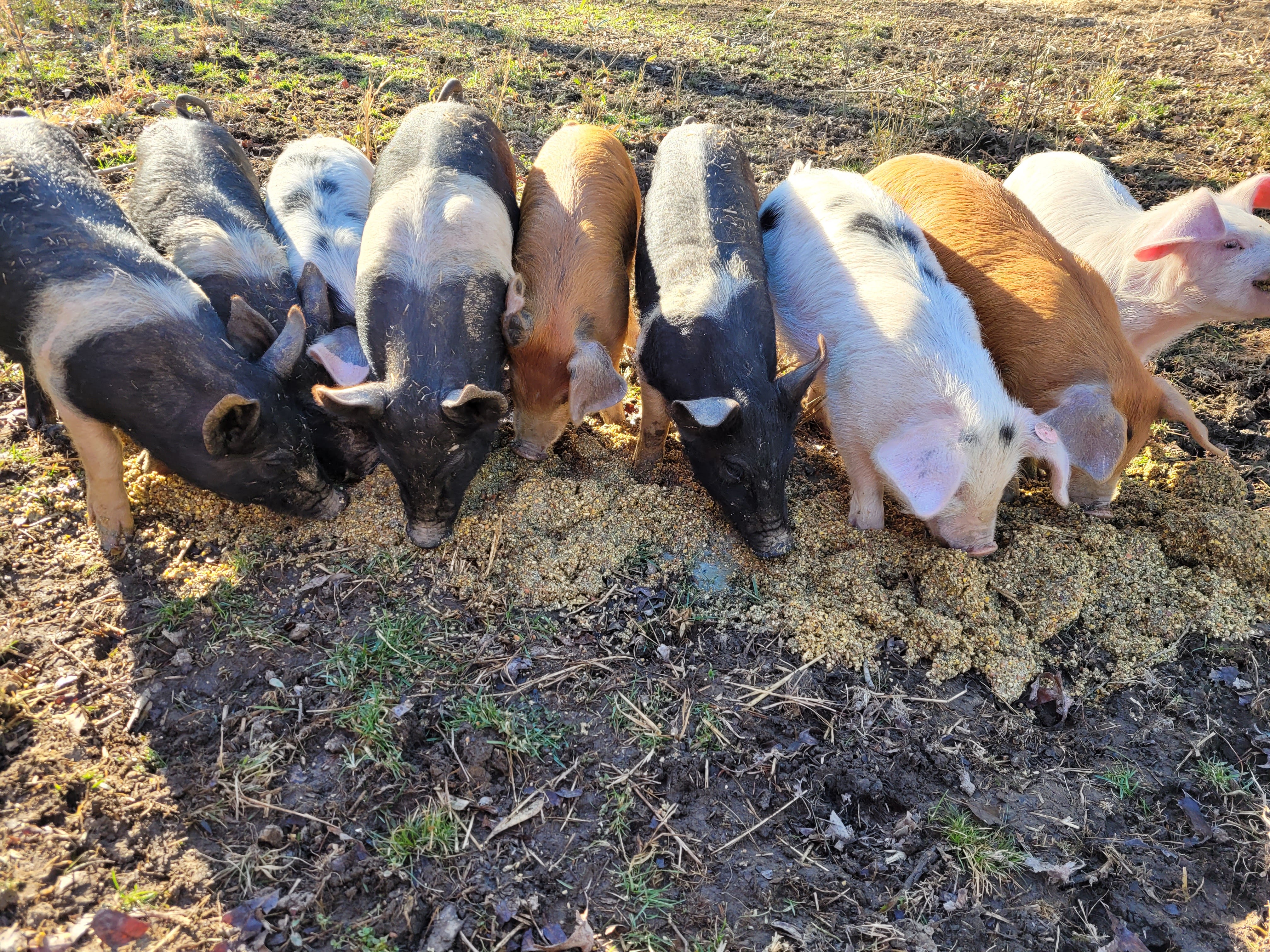
By using Meishans as the maternal line and pairing them with carefully chosen heritage boars, we aim to develop a three-way cross that thrives in silvopasture, is economically viable to raise, and produces a product of outstanding quality. These crosses maximize heterosis (hybrid vigor), enhancing disease resistance, feed conversion, and resilience in variable pasture conditions. They are ideal for our system which limits outside inputs, minimizes medication and intervention, and emphasizes ecological compatibility. The resulting pigs are thrifty, calm, and well-adapted to the low-stress, rotational grazing of silvopasture. These animals offer both sustainable pork production and environmental stewardship—a rare but achievable combination when guided by intentional genetics and management.
This breeding approach not only helps regenerate degraded land through managed pig impact and fertilization, but it also aligns with consumer demand for humane and healthy pasture-raised meat and lard from heritage breeds with regenerative farming practices. The inclusion of Meishan genetics offers a biological "engine" for prolific, easy-keeping sows, while the heritage boars sculpt the carcass and growth traits for modern markets. The outcome is a pig that belongs in the woods, under the trees, finishing on acorns, apples, and forage- a silvopasture hog that meets both ecological and economic goals.